

Old Town Silverdale
Old Town Silverdale, told from Byron Street
Old Town is a few waterfront blocks with a long memory. This page is a short walk through that story — the inlet, the boats, the buildings, and the gathering places that came before the shop and trailer you see today.
This corner of Dyes Inlet
The Suquamish people knew this inlet as Sa'quad — "spear it" — long before it had an English name. In , the United States Exploring Expedition under Capt. Charles Wilkes charted the inlet and named it Dyes Inlet, after John W. W. Dyes, the assistant taxidermist on the voyage.
When settlers arrived, they had grander ambitions for the town's name. Early boosters pushed for "Goldendale" — until they learned that name was already taken elsewhere in Washington. Silverdale it became, a quieter nod to the same optimism. Logging came first, then farms, then a small commercial waterfront that grew around the dock at the foot of what is now Byron Street.
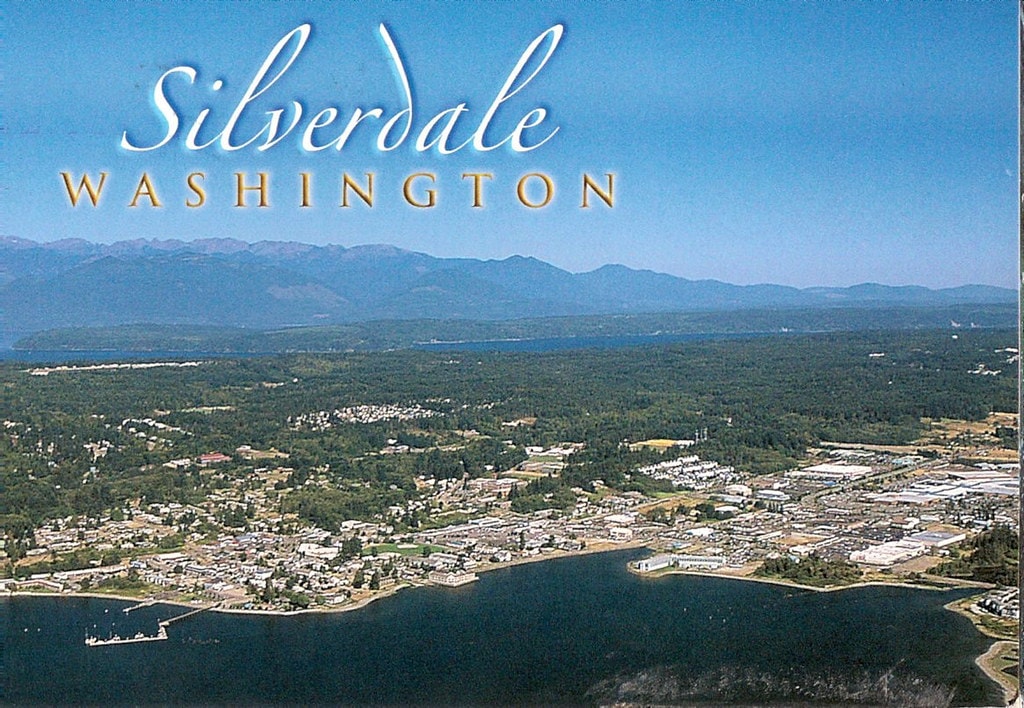
Old Town was the original center of Silverdale — the dock, the main street, the gathering place. During the height of the agricultural era, record-setting shipments of poultry and eggs left from this waterfront. The local newspaper editor wrote: "From Silverdale, the cackle of hens was heard round the world."
Before roads: the Mosquito Fleet
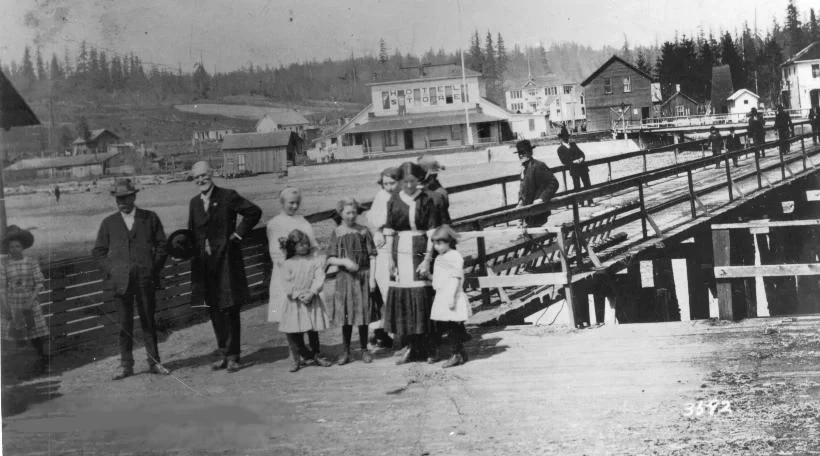
Before roads connected the Kitsap Peninsula to the rest of the region, Puget Sound was the highway. A loose network of small, privately operated steamers — known collectively as the Mosquito Fleet — carried passengers, mail, produce, and freight between waterfront communities and Seattle.
Silverdale's dock was a stop on that network. Farmers brought their eggs and produce down to the wharf; passengers boarded for the crossing to Seattle. Capt. Martin Madison was one of the men who ran those runs — a Mosquito Fleet ferry captain remembered in local history, pipe in mouth at the wheel.
The Port of Silverdale was created by public vote on , specifically to manage the wharf and keep the waterfront working. When cars arrived and roads improved, the Mosquito Fleet faded. In , the old dock was burned to make way for a new boat launch and park — Port officials thought the burn would take one day; it took two weeks.
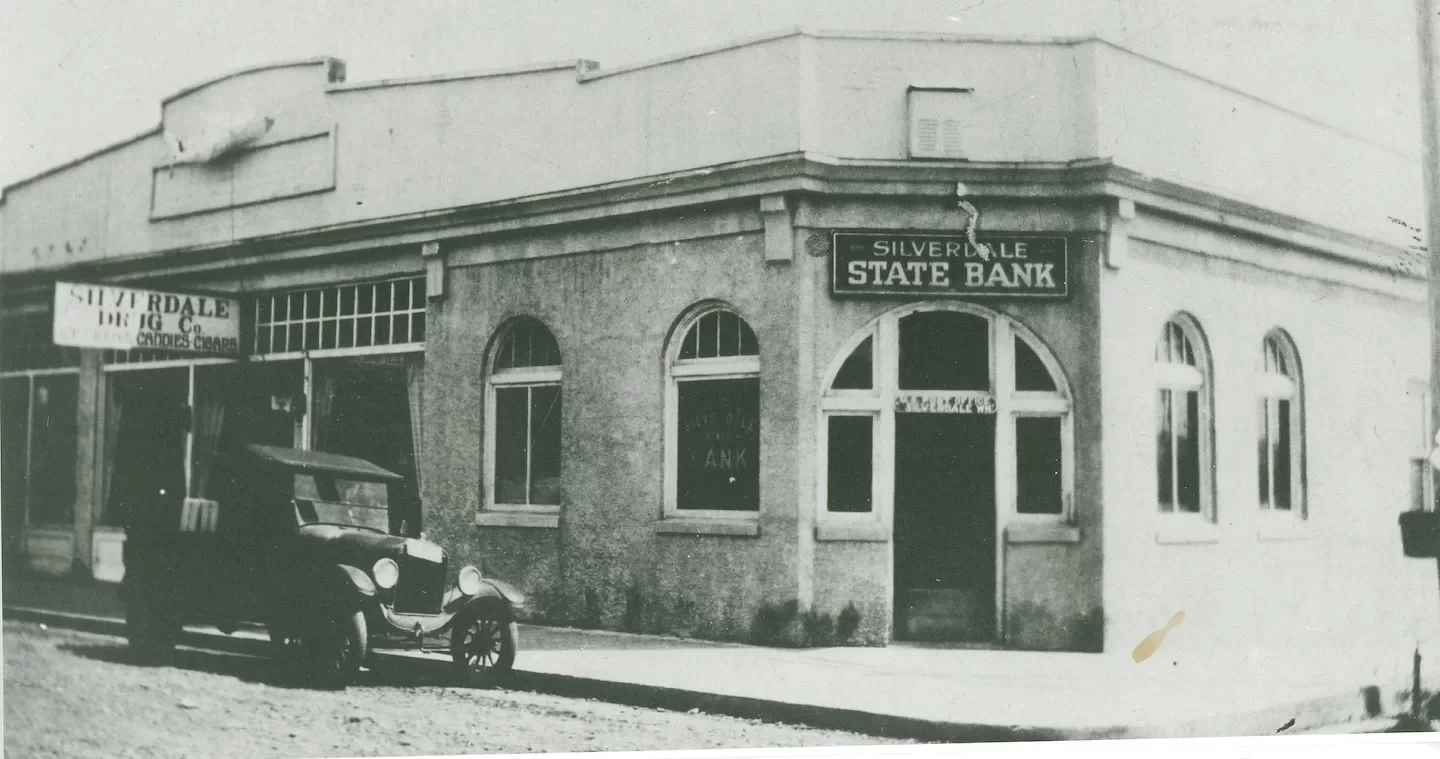
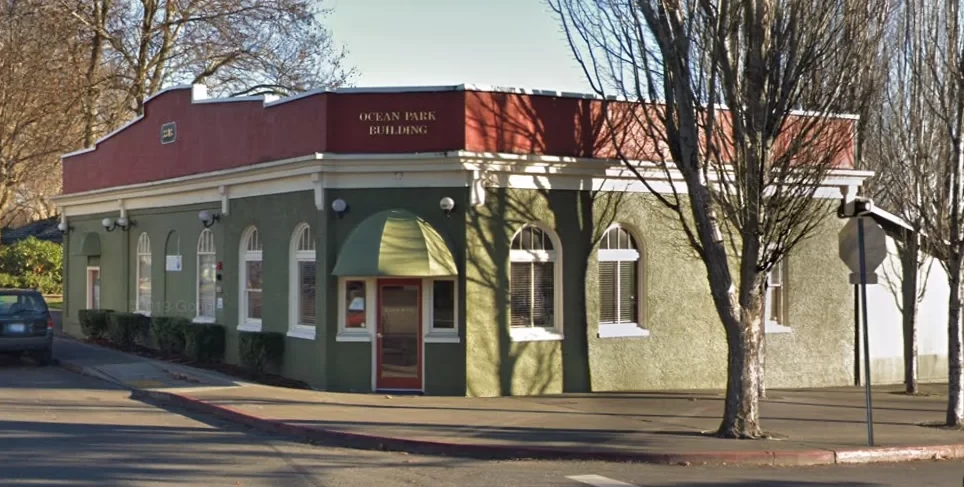
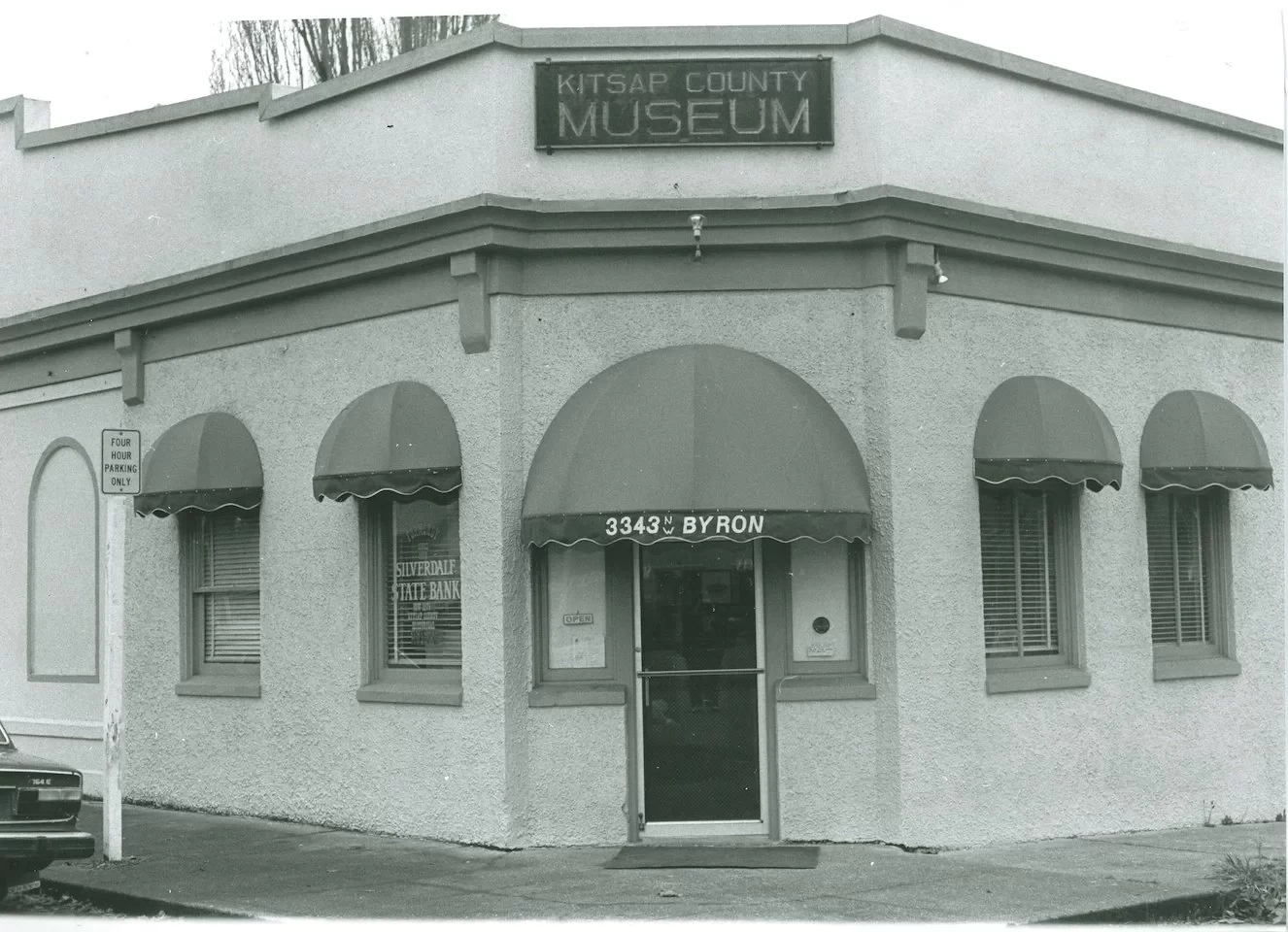
3421 NW Byron — this block
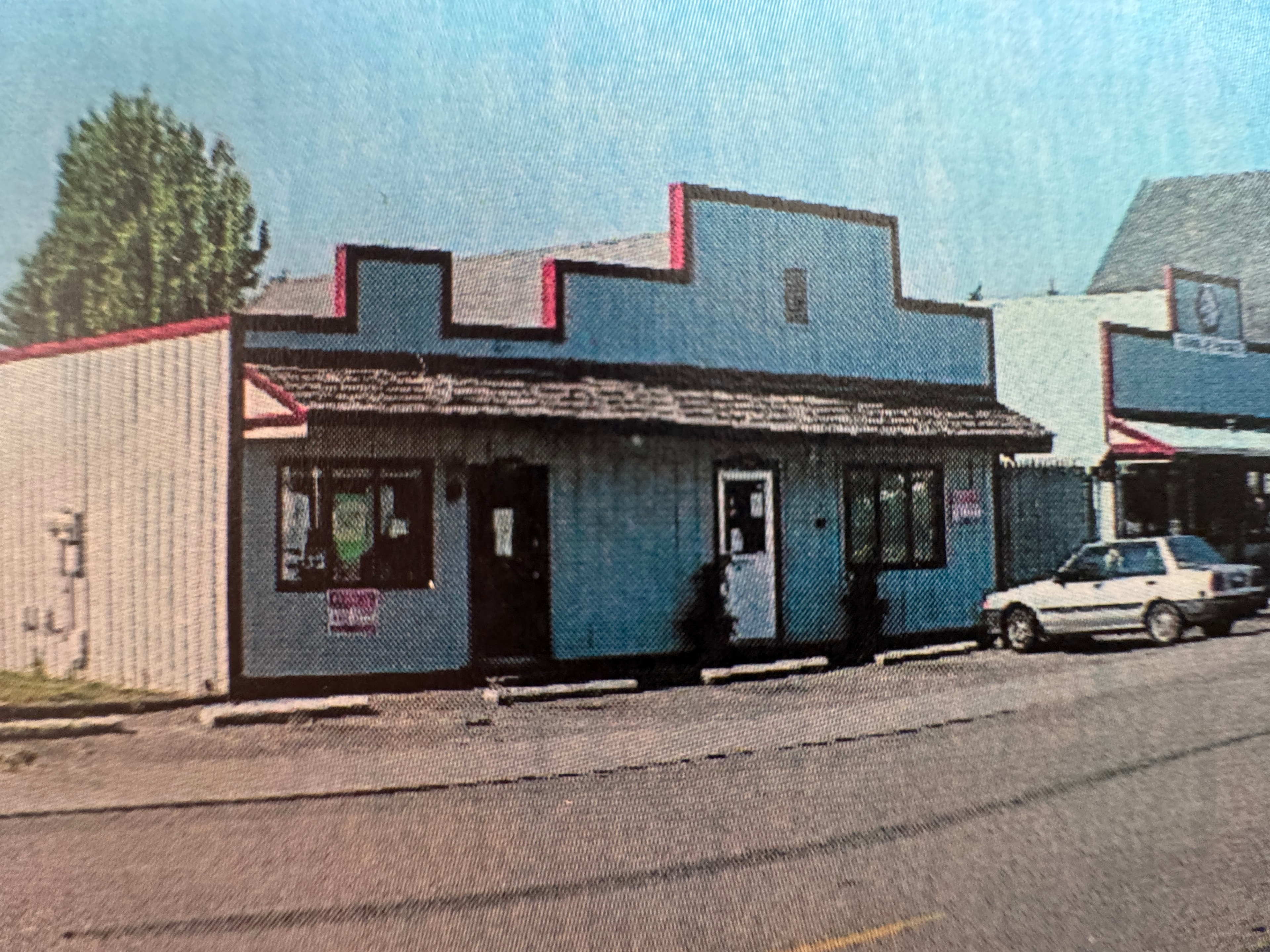
The building at 3421–23 NW Byron Street has been a gathering place for nearly a century. County records note construction in 1935; other sources say 1928, remodeled in 1935 and again in 1987. Notes differ, but the block's story is clear enough.
In , an advertisement announced Benbennick Place — lunches and coffee, pool and card tables, gas and oil service, and a barber shop connected. The Kitsap County Herald of noted that Mr. and Mrs. C. Benbennick had opened a restaurant at Silverdale: "Mrs. Benbennick is an expert cook. Your reporter will have to come up and sample some of the good eats."
A 1939 photograph from the Stottlemyer Collection shows a Union 76 station on this corner. Woody the barber drove the Model A. The Port of Silverdale has owned the property since .
Old Town Mercantile and Byron Street Bites are the current chapter of this corner.
The Byron Street block through the years
The Old Town Pub
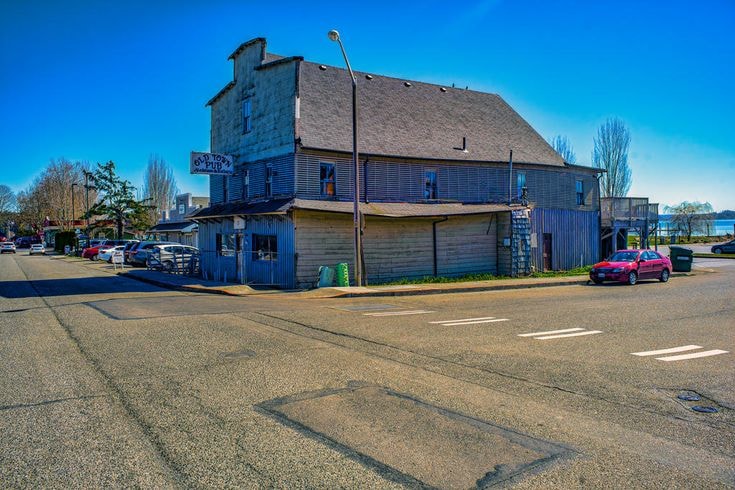
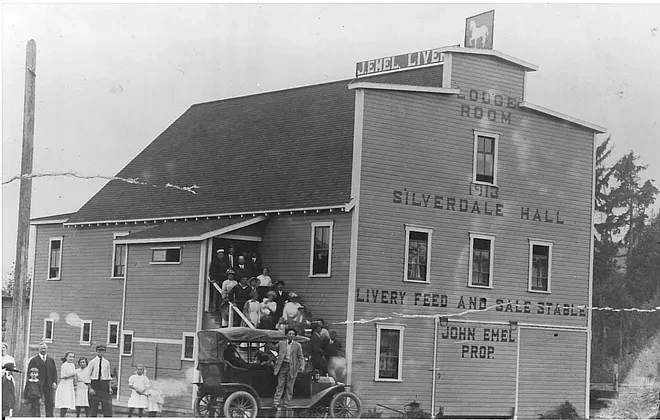
A few doors down at 3473 NW Byron stood one of Old Town's most storied buildings. John J. Emel built Emel's Livery Stable & Hall between and — a stable on the ground floor, a community hall and lodge room above. The Emel family was part of the fabric of early Silverdale; Peter Emel, a relative, drove a Ford camper truck to and from California in on whatever roads were available.
Over the decades the building became a restaurant and beer parlor, then Pickles Tavern, then Stables Tavern, and finally the Old Town Pub — a neighborhood fixture that regulars remember fondly. It closed in .
The building was demolished on . It was a long run for a building that started as a livery stable and ended as a pub. Old Town is quieter for its absence.

The Port, the park, and today
The Port of Silverdale still manages the waterfront it was created to serve in . In , the old dock was burned to make way for a new boat launch and park — a two-week project that transformed the working wharf into the public green space that exists today.
Silverdale Waterfront Park sits at the foot of Byron Street — a boat launch, a dock, a playground, and a view across Dyes Inlet to the Olympic Mountains. Every summer, Whaling Days fills the park with music and food. The Northwest Old Timers Car Show rolls down Byron Street each Father's Day weekend. The Daffodil Festival brings color to the planters every spring.
Old Town Mercantile and Byron Street Bites are at 3421 NW Byron — the same corner that has been a place to stop, eat, and gather since the 1920s. Come find us.
Further reading
These sources informed this page. We encourage you to explore them.
- "Silverdale" — Images of America series (Arcadia Publishing, 2014), by the Kitsap County Historical Society
- Port of Silverdale — history and historic pictures
- HistoryLink: Port of Silverdale (File 9628)
- HistoryLink: Mosquito Fleet (File 869)
- Kitsap Daily News: Randy Hunt, "A history of the Old Town Pub"
- Kitsap Sun: coverage of the 2017 closing and 2025 demolition
- Kitsap History Museum — Mosquito Fleet pages